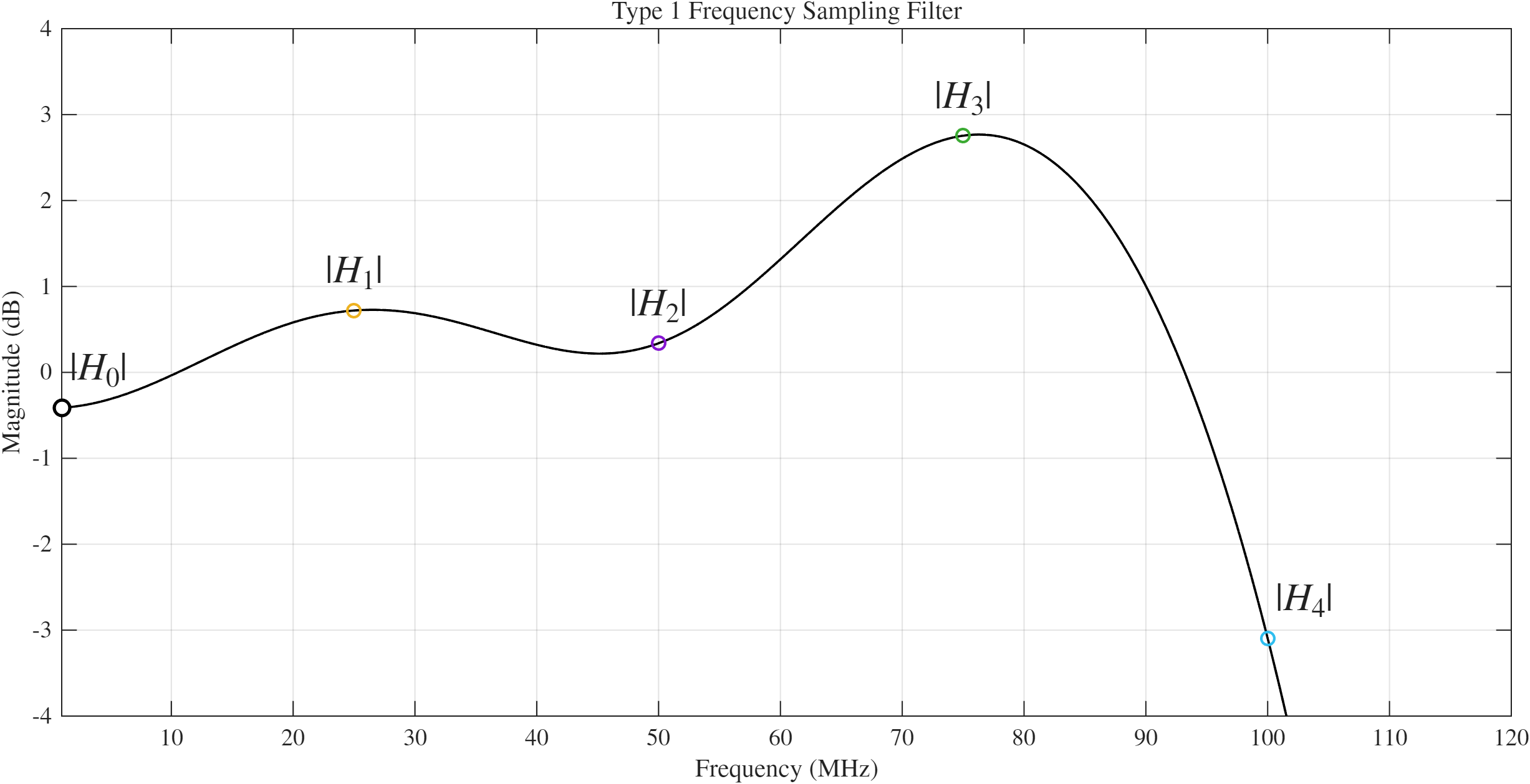
Analog frequency sampling filters (FSFs)  realize a desired frequency response by interpolating a frequency response through a set of harmonically related frequency samples from the filter's frequency response and are magnitude and phase coefficients used in the filters transfer function. FSFs can be designed to have exact linear phase which makes the FSF attractive for many applications. A FSF's system transfer function~(STF) shows that the filter can be implemented by a series connection of a comb filter and a parallel array of resonators. However, the FSF requires that the zeros created by the comb filter cancel the imaginary axis poles generated by the resonators. Because exact pole-zero cancellation is typically not feasible, the FSF's resonator's poles and the comb filters zeros are typically shifted into the left–hand plane. This causes the filter to lose of exact linear phase.

Although a FSF interpolates a frequency response through the filter's frequency samples, the filter's frequency response may be undesirable between samples. In this thesis, an optimization method is developed that minimizes interpolation errors between frequency samples while generating a near-linear phase frequency sampling filter (NL-FSF). The method describes the filter's frequency response as a function of the filter's frequency samples. A weighted cost function uses this description to minimize the energy between the desired and actual frequency responses. The cost function incorporates weighting parameters that allow weighting between passband errors, stopband errors, and minimizing linear phase deviations. The cost function is minimized using a Hybrid Trust--Region Levenberg--Marquardt (TR--LM) Algorithm, with fully derived gradients and Hessians.

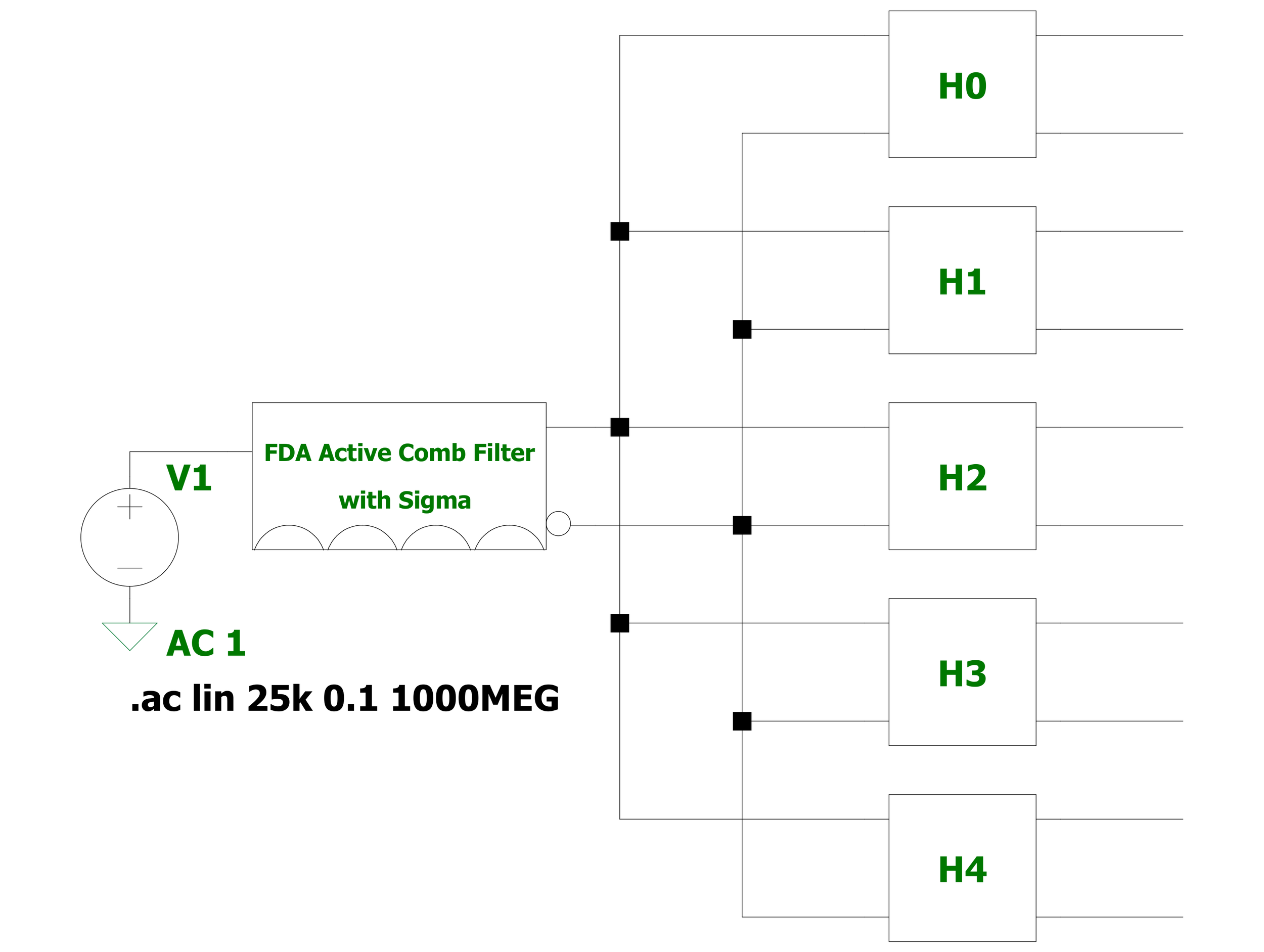
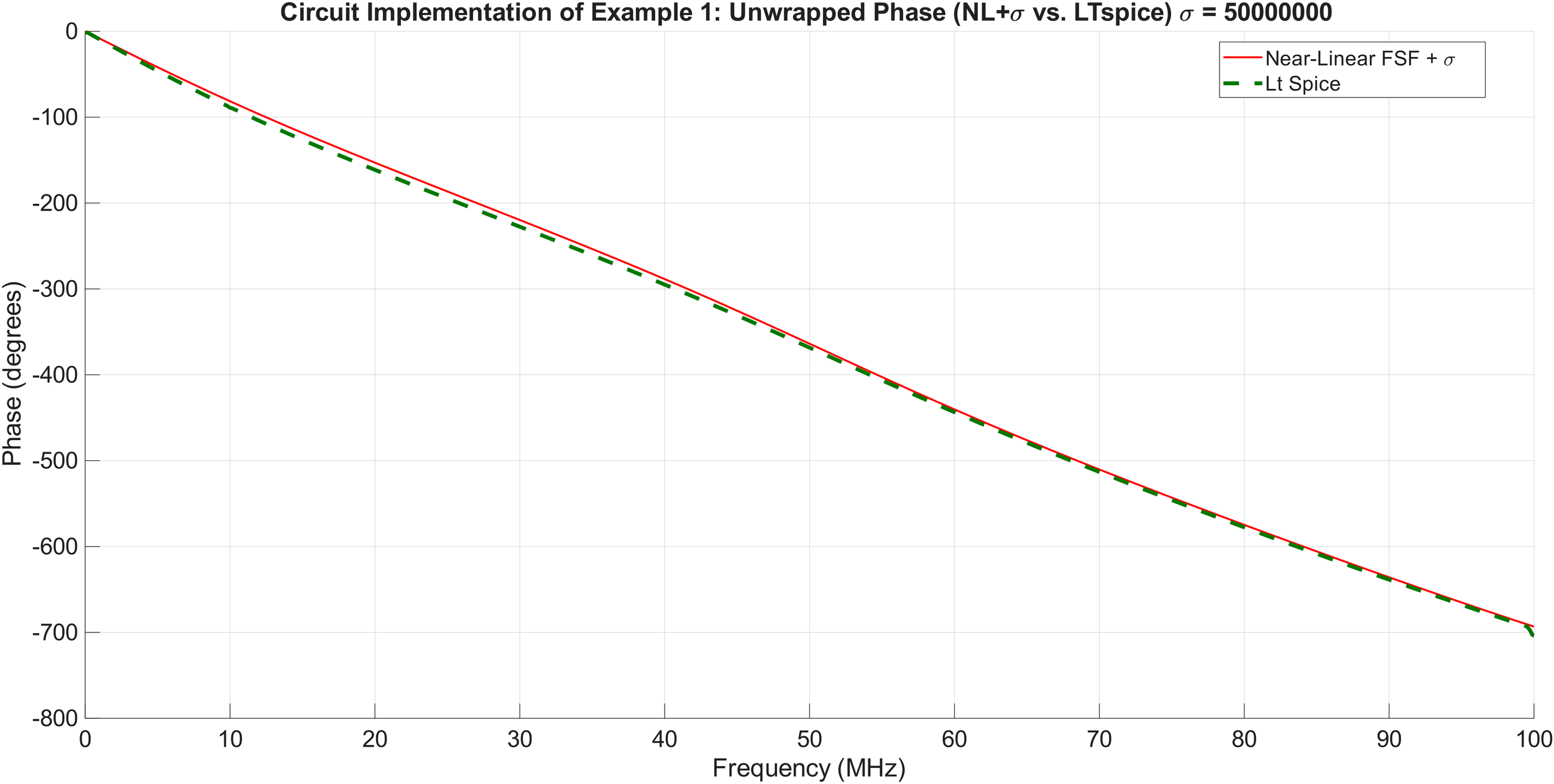
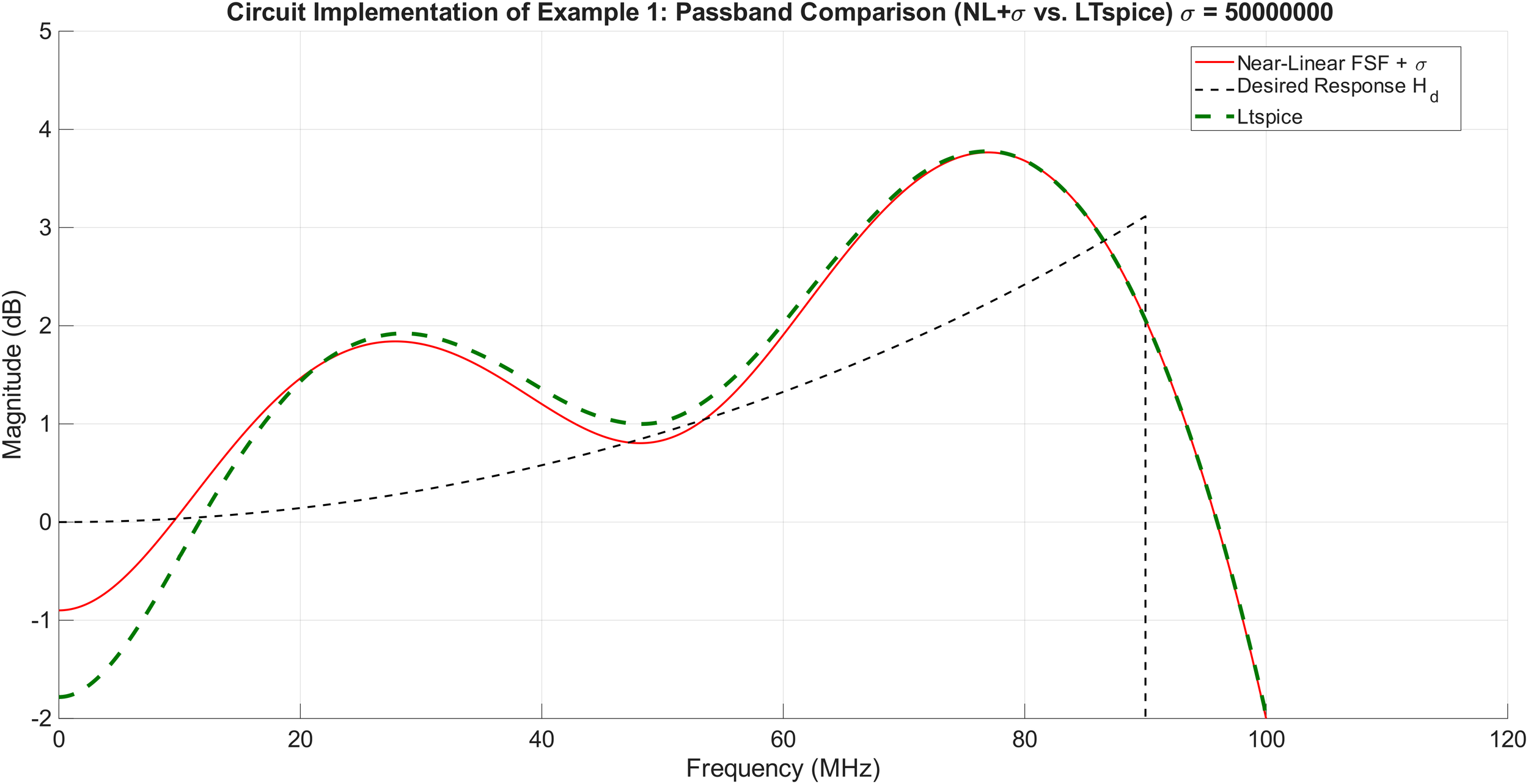
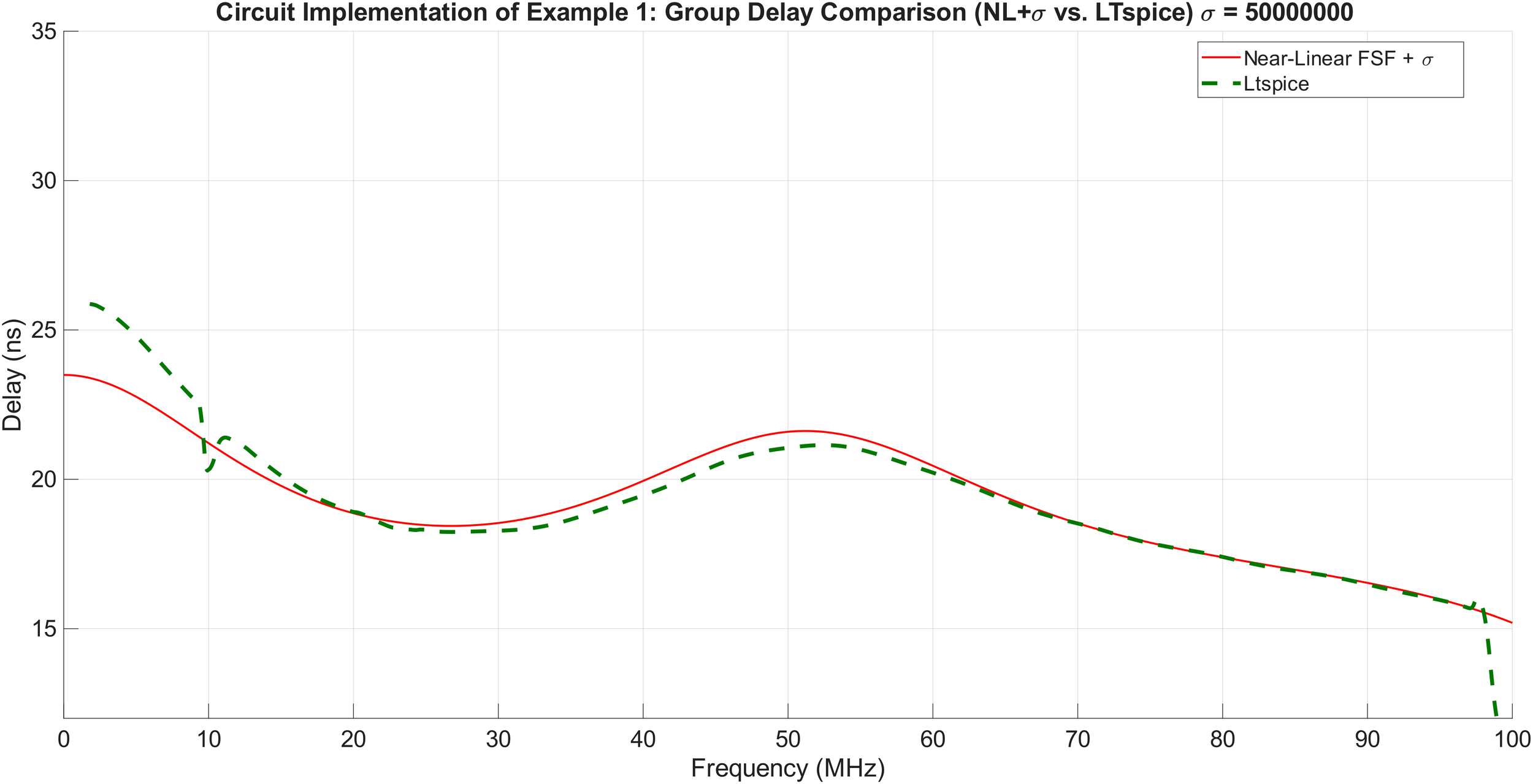
Several examples demonstrate that the optimization method is effective in designing a NL-FSF. These examples are implemented using component-level SPICE simulations. The comb filter is implemented using a delay line with a set delay period and combining the delayed signal with the original signal through a difference amplifier and then through a fully differential active biquad. The resonators are also implemented using fully differential active biquads. The resulting SPICE simulations closely match the MATLAB models, demonstrating the feasibility of the NL-FSF design method.